Product Introduction
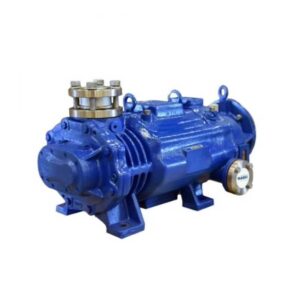
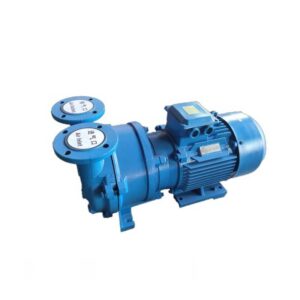
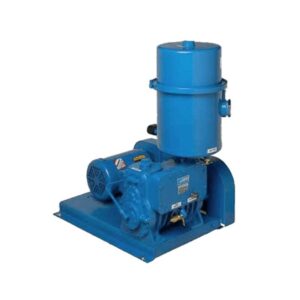
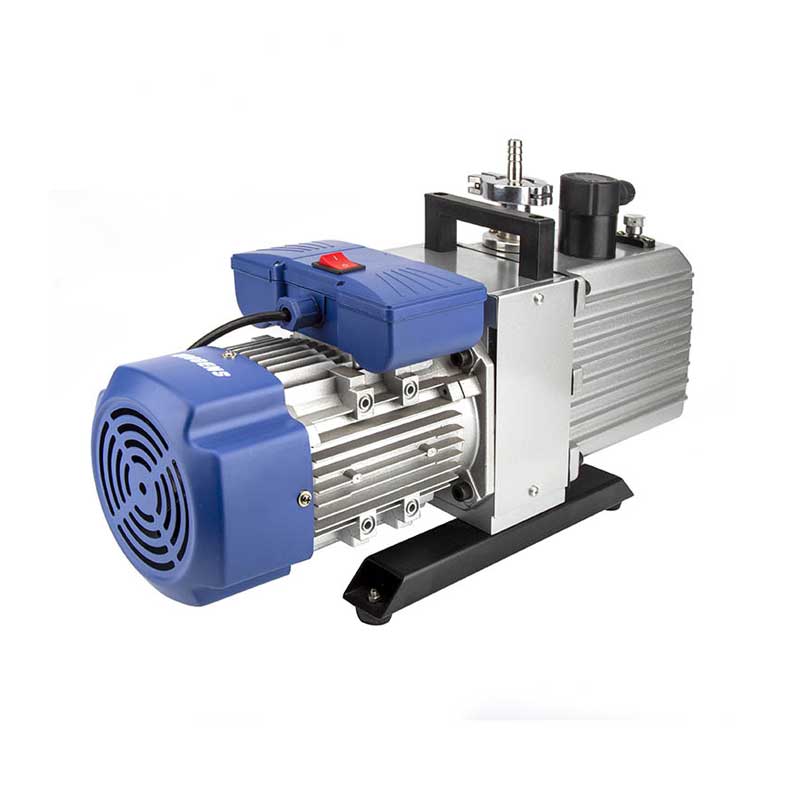
The Rotary Vane Vacuum Pump is one of the most widely used and efficient technologies for generating medium-to-high vacuum. It is a positive displacement pump prized for its compact design, quiet operation, and ability to produce a powerful, stable vacuum. The most common variant is the oil-sealed rotary vane pump, which uses a specially formulated oil to achieve an excellent ultimate pressure, making it a versatile workhorse for countless applications ranging from industrial manufacturing and food packaging to scientific research and air conditioning service.
Design Philosophy & Construction
The pump’s operation is based on a simple, proven mechanical principle that efficiently traps and compresses gas.
- Core Mechanism: The heart of the pump consists of three main parts:
- A cylindrical housing, or stator.
- A rotor that is mounted eccentrically (off-center) inside the stator.
- Several vanes that are fitted into slots in the rotor and are free to slide in and out.
- Pumping Cycle:
- Intake: As the rotor spins, centrifugal force (and sometimes springs) pushes the vanes outward, so they maintain constant contact with the inner wall of the stator. On the inlet side, the volume of the chamber trapped between two vanes expands, creating a vacuum that draws gas in from the system.
- Transfer & Compression: The trapped pocket of gas is carried around inside the pump. Due to the rotor’s eccentric position, the volume of this chamber progressively shrinks, compressing the gas.
- Exhaust: This compression continues until the pressure of the trapped gas is greater than the atmospheric pressure outside, forcing open a one-way exhaust valve and ejecting the gas from the pump.
- The Crucial Role of Oil: In an oil-sealed pump, a circulating flow of vacuum oil is essential. It performs several critical functions simultaneously:
- Sealing: It creates a fine, low-vapor-pressure seal between the tips of the vanes and the stator wall, which is vital for achieving a deep vacuum.
- Lubrication: It lubricates all moving parts to minimize wear and ensure a long service life.
- Cooling: It absorbs the heat generated by the gas compression and transfers it to the pump body to be dissipated.
Key Features & Benefits
- High Vacuum Level: Capable of reaching low ultimate pressures, making it suitable for a wide range of demanding applications. Two-stage versions are available for even deeper vacuum requirements.
- Quiet, Low-Vibration Operation: The smooth rotational motion results in very low noise and vibration levels, making it ideal for installation in laboratories or indoor production areas.
- Compact & Air-Cooled Design: These pumps offer a high pumping speed relative to their physical size. Most are air-cooled, simplifying installation as no water supply is needed.
- High Reliability: The design is mature, robust, and proven to provide long, trouble-free service when properly maintained with clean oil.
- Integrated Protective Features: Many models include an anti-suck-back valve that automatically isolates the pump from the vacuum system upon shutdown, preventing oil from migrating back into the user’s chamber.
Common Applications
The rotary vane pump is a versatile, general-purpose vacuum source found in nearly every industry.
- Refrigeration & Air Conditioning: The primary tool for evacuating HVAC&R systems prior to charging with refrigerant.
- Vacuum Packaging: Widely used in the food industry to package meat, cheese, and other perishables, and for industrial packaging of electronics.
- Laboratory & Scientific: Used as a backing pump for high-vacuum turbo pumps, in freeze dryers, electron microscopes, and glove boxes.
- Industrial Manufacturing: Vacuum forming and thermoforming of plastics, CNC vacuum chucks, vacuum lifting, and the degassing of resins and epoxies.
- Medical & Dental: Powering medical suction equipment, autoclaves, and sterilizers.