Product Introduction
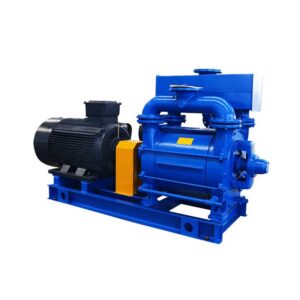
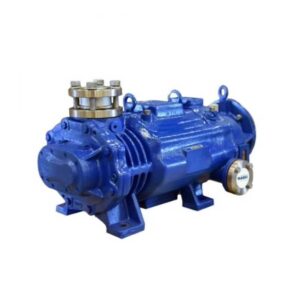
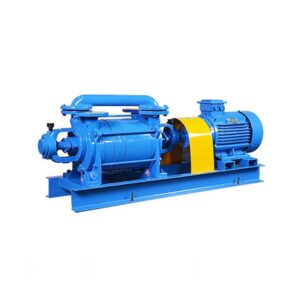
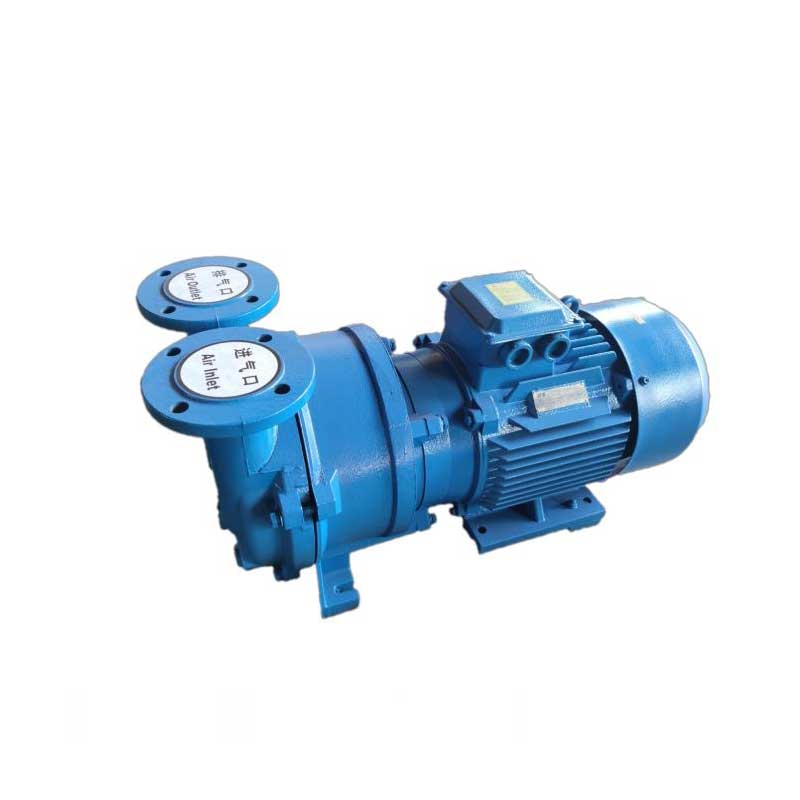
The Series Liquid Ring Vacuum Pump is an exceptionally robust and reliable machine designed to generate vacuum in demanding industrial environments, especially those with wet, corrosive, or condensable gas streams. Unlike dry vacuum pumps, it uses a ring of sealing liquid (typically water) to create the vacuum. This unique principle makes it incredibly tolerant of process upsets and allows it to handle gas loads that would damage other types of vacuum pumps. The series, with its modern monoblock design, offers a compact, low-maintenance, and efficient solution for a wide range of applications, from chemical processing to plastics extrusion.
Design Philosophy & Construction
The magic of this pump lies in its simple yet ingenious operating principle, which uses a rotating ring of liquid as a series of “liquid pistons.”
- Core Components: The pump consists of a casing and a multi-bladed impeller that is mounted eccentrically (off-center) inside it.
- Operating Principle:
- Forming the Ring: The pump is first partially filled with a sealing liquid. As the impeller rotates, centrifugal force throws this liquid against the inner wall of the casing, forming a stable, concentric ring of liquid.
- Creating Vacuum: Because the impeller is off-center, the pockets (or “cells”) between the impeller blades and the liquid ring continuously change in volume as the impeller rotates.
- Suction: On the side where the impeller blades are moving away from the liquid ring, the cell volume increases. This expansion creates a vacuum, drawing gas from the system into the pump through the suction port.
- Discharge: As the rotation continues, the blades move closer to the liquid ring, and the cell volume decreases. This compresses the trapped gas until its pressure exceeds the outlet pressure, at which point the gas and a small amount of the sealing liquid are expelled through the discharge port.
- Monoblock Construction: The series is a close-coupled or monoblock design, meaning the pump and motor are built as a single, compact unit. This eliminates the need for a separate baseplate and coupling, saving significant space and removing the need for shaft alignment.
Key Features & Benefits
- Handles Saturated Vapors and Liquid Carryover: This is its greatest strength. It can ingest condensable vapors and even small slugs of liquid without damage, making it perfect for wet vacuum processes like distillation and drying.
- Cool & Safe Operation: The sealing liquid absorbs the heat of compression, making the entire process nearly isothermal (constant temperature). This allows for the safe handling of heat-sensitive and potentially explosive gases.
- Extremely Simple and Reliable: With only one primary moving part and no metal-to-metal contact between the impeller and casing, the pump is exceptionally reliable, requires very little maintenance, and has a long service life.
- Oil-Free Vacuum: The vacuum is generated without any lubricating oil in the pumping chamber, ensuring the process gas remains free from hydrocarbon contamination.
- Quiet, Low-Vibration Performance: The liquid ring absorbs pulsation and ensures a smooth, quiet operation with minimal vibration.
- Corrosion Resistance: Available in a variety of materials, including stainless steel, to handle corrosive gases and liquids.
Common Applications
The pump is the workhorse for medium-vacuum applications where the gas stream is not clean and dry.
- Chemical & Pharmaceutical: Vacuum filtration, distillation, solvent recovery, and reactor drying.
- Plastics Industry: Degassing extruder barrels, vacuum forming, and sizing tables.
- Food & Beverage: Deaeration of mineral water, vacuum packaging of meat and produce, and bottle filling.
- Power Generation: Hogging and holding vacuum on steam turbine condensers.
- General Industry: Medical sterilization (autoclaves), wood impregnation, central vacuum systems for labs and hospitals, and paper machine dewatering.