Product Introduction
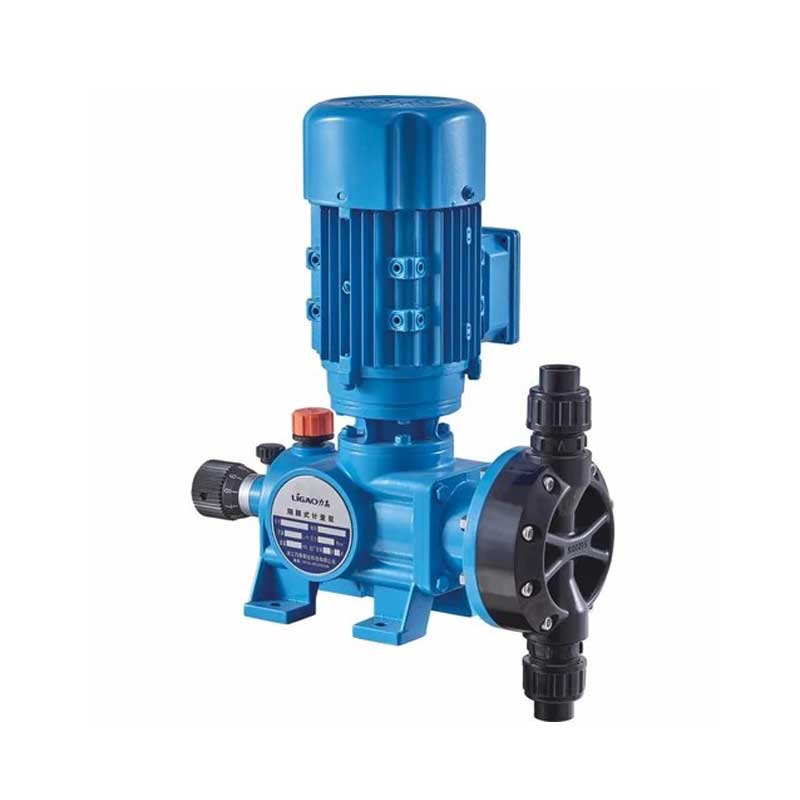
This Series is a high-precision positive displacement metering pump, engineered specifically for the accurate and reliable injection of chemical agents into a process stream or vessel. Unlike transfer pumps that are designed to move large volumes of fluid, the pump is a specialized instrument designed to deliver small, precisely controlled flow rates, often against high system pressure. Its robust design and exceptional accuracy make it an essential component for automated process control in water treatment, chemical manufacturing, agriculture, and a multitude of other industries where consistent chemical treatment is critical.
Design Philosophy & Construction
The core of the pump is a mechanically-driven reciprocating mechanism designed for accuracy and repeatability.
- Robust Drive Mechanism: An electric motor powers an integrated gearbox containing an eccentric cam or crankshaft. This system efficiently converts the motor’s rotary motion into a linear, reciprocating stroke. The entire drive unit is typically housed in a durable, sealed casing with an oil bath for lubrication, ensuring long-term reliability.
- Adjustable Stroke Length: The pump features a manual or automatic control mechanism that allows for the precise adjustment of the stroke length (the travel distance of the plunger or diaphragm). This provides the primary means of controlling the volume of fluid displaced with each stroke.
- High-Efficiency Pump Head: The “wetted end” of the pump, or pump head, is where the pumping action occurs. It consists of:
- A Plunger (Piston) or Mechanically Actuated Diaphragm that performs the displacement. Diaphragm models offer the benefit of a hermetically sealed, leak-proof design.
- Dual Check Valves: High-precision suction and discharge check valves (typically a ball-and-seat design) ensure the fluid moves in only one direction and prevent backflow, which is critical for dosing accuracy.
- Superior Chemical Resistance: All wetted components—the pump head, diaphragm, plunger, and check valves—are constructed from materials selected for maximum resistance to aggressive chemicals. Common materials include PVDF, PVC, 316 Stainless Steel, and PTFE, ensuring compatibility and longevity even with the most corrosive media.
Key Features & Benefits
- Exceptional Dosing Accuracy: Delivers a consistent and repeatable volume on each stroke, with a typical metering accuracy of ±1%, ensuring precise and economical chemical usage.
- Wide-Range Adjustability: The flow rate can be finely tuned via the adjustable stroke length, and often by controlling the stroke speed (motor RPM) with a Variable Frequency Drive (VFD), providing a very high turndown ratio.
- High-Pressure Capability: Engineered to overcome high back-pressures, allowing it to inject chemicals directly into pressurized water mains, boiler systems, and chemical reactors.
- Leak-Proof and Safe (Diaphragm Models): The diaphragm acts as a solid barrier between the chemical and the drive mechanism, eliminating leaks and protecting the pump’s internals. This is vital for safety when handling hazardous chemicals.
- Built for Continuous Duty: The robust gearbox and motor are designed for reliable, 24/7 operation with minimal maintenance.
- Versatile and Adaptable: A single pump can be adjusted to serve a wide range of flow rate requirements, and its compact design allows for easy integration into existing systems.
Common Applications
The Series is the go-to solution for any process requiring the precise addition of a liquid chemical.
- Municipal Water Treatment: The cornerstone of water purification plants for dosing chlorine (disinfection), sodium hypochlorite, aluminum sulfate (coagulants), fluoride, and caustics/acids for pH control.
- Wastewater Treatment: Injecting polymers, flocculants, and other reagents to facilitate the separation of solids.
- Agriculture & Horticulture (Fertigation): Precisely injecting liquid fertilizers, pesticides, and nutrients into irrigation systems.
- Industrial Process Control: Dosing catalysts, inhibitors, additives, and reactants in chemical, petrochemical, and manufacturing plants.
- Boiler and Cooling Tower Systems: Metering of corrosion inhibitors, biocides, and pH control chemicals to protect equipment.
- Food & Beverage: Accurately adding vitamins, flavorings, sanitizing agents, and preservatives.
- Swimming Pools & Spas: Automated dosing of chlorine and pH-balancing chemicals for public and private pools.