Product Introduction
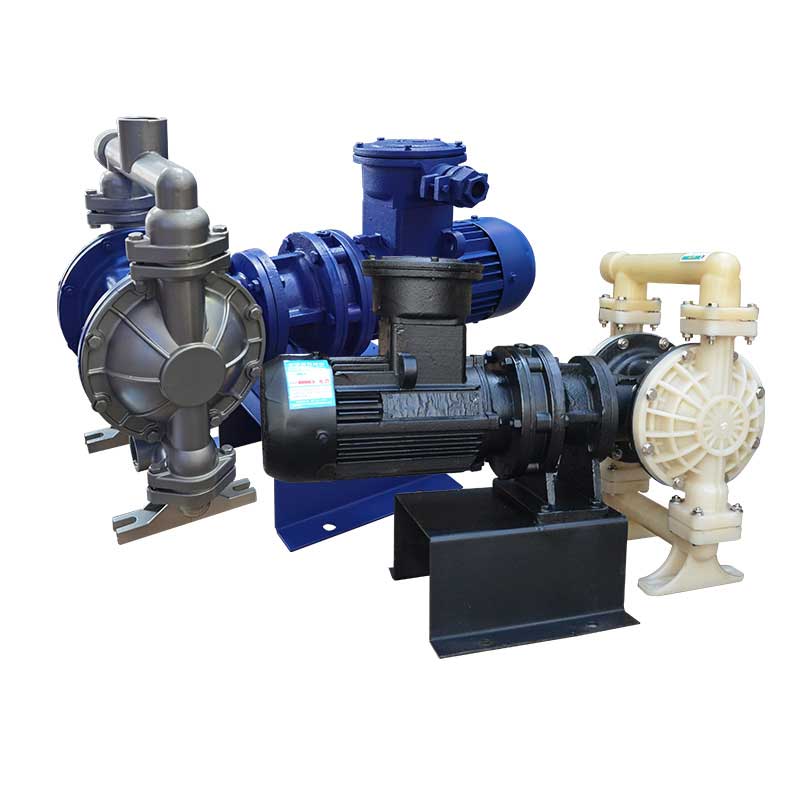
This Series Electric Double Diaphragm Pump represents a significant evolution in positive displacement technology, offering the same fluid handling versatility as its air-operated counterpart but with the high efficiency and precise control of an electric motor. This pump is the ideal solution for applications where compressed air is unavailable, costly, or where greater energy efficiency and repeatable flow control are top priorities. It combines the robust, seal-less design of a diaphragm pump with a powerful electric drive, making it perfect for the continuous, metered transfer of difficult fluids in a wide range of industrial settings.
Design Philosophy & Construction
While the fluid-handling principle remains the same as an AODD pump, the series replaces the pneumatic engine with a robust mechanical drive train.
- Electric Drive System: The core of the pump is a high-efficiency electric motor coupled with a heavy-duty gear reducer. The gearbox converts the high-speed rotation of the motor into low-speed, high-torque reciprocating motion.
- Crankshaft Mechanism: An eccentric crankshaft assembly translates the rotary output from the gearbox into a linear, back-and-forth movement. This drives the connecting rod and the diaphragm shaft, creating the powerful pumping action.
- Proven Diaphragm Technology: The pump utilizes the same proven dual-diaphragm and check-valve system. As the electric drive pushes one diaphragm forward to discharge fluid, it simultaneously pulls the other diaphragm back to suction fluid, ensuring a continuous and powerful flow.
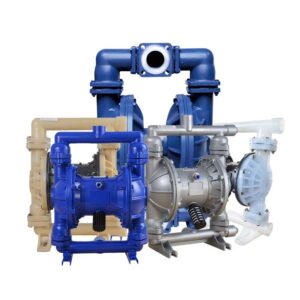
- Broad Material Selection: Just like the QBY series, the wetted components of the pump (the liquid chambers, diaphragms, and valve balls) are available in a comprehensive range of materials. This includes pump bodies in Stainless Steel, Cast Iron, and Aluminum, with various elastomer options to ensure complete chemical compatibility with the pumped fluid.
Key Features & Benefits
- Superior Energy Efficiency: This is the primary advantage of the series. By using electricity directly, it can be up to 5 times more energy-efficient than a compressed air-driven AODD pump, leading to significant reductions in operational costs.
- Precise Flow Rate Control: When paired with a Variable Frequency Drive (VFD), the pump’s speed can be accurately adjusted. This allows for precise, repeatable control over the flow rate, making it ideal for batching, dosing, and metering applications.
- Lower Infrastructure Costs: Eliminates the need for a large, expensive air compressor, air dryers, and complex airline installations, reducing both initial capital investment and ongoing maintenance.
- Consistent Performance: The electric drive provides a constant, stable operation that is not subject to fluctuations in plant air pressure, resulting in a more predictable and reliable output.
- Reduced Noise Levels: Operates significantly quieter than pneumatic pumps, which improves the workplace environment.
- Retains Core Diaphragm Benefits: It maintains the key advantages of diaphragm technology, including excellent self-priming capabilities, the ability to handle viscous and abrasive liquids, and a low-shear pumping action for sensitive fluids.
Common Applications
The Electric Diaphragm Pump excels in scenarios that demand efficiency, control, and reliable, continuous operation.
- Chemical Dosing & Transfer: Precisely feeding chemicals in water treatment, manufacturing processes, and agricultural applications.
- Water & Wastewater Treatment: Dependable transfer of sludge, slurries, and reagents without the high cost of compressed air.
- Filter Press Applications: Providing the steady, high-pressure flow needed for efficient filter press operation.
- Ceramics and Coatings: Moving abrasive slips, glazes, and viscous coatings with precision.
- Pulp & Paper Industry: Transferring clays, starches, and additives.
- General Industrial Transfer: A preferred choice for any fluid transfer, loading/unloading, or circulation task where electricity is the primary power source.