Product Introduction
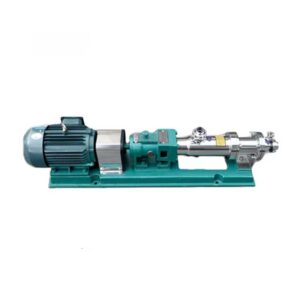
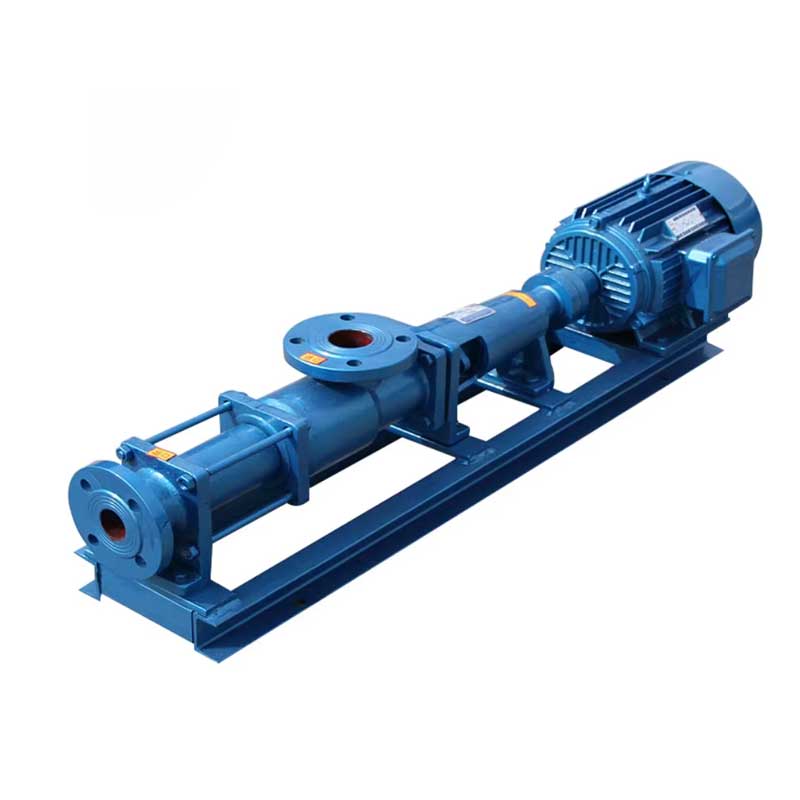
This Series Progressive Cavity Pump is a specialized positive displacement pump designed to transfer the most challenging fluids where other pumps fail. It is engineered to handle liquids with extremely high viscosity, high solids content, and shear-sensitive properties with a steady, pulsation-free flow. Often referred to as a “PC Pump” or “Mono Pump,” its unique operating principle makes it less of a traditional pump and more of a mechanical conveyor for fluids, pastes, and sludges. It is the definitive solution for demanding transfer and metering applications in wastewater treatment, food processing, chemical manufacturing, and mining.
Design Philosophy & Construction
The elegance of the Series pump lies in its simple design, featuring only one primary moving part in the fluid path.
- Rotor & Stator Heart: The core of the pump consists of two precisely matched components:
- A Rotor: A single-helix, screw-shaped part, typically machined from hardened stainless steel and often chrome-plated for extreme wear resistance.
- A Stator: A double-helix internal sleeve, molded from a resilient elastomer (like Nitrile, EPDM, or Viton) and bonded within a steel tube.
- Progressing Cavity Principle: The rotor is inserted into the stator and turns with an eccentric motion. This unique geometry forms a series of sealed, pocket-like cavities between the rotor and the stator wall. As the rotor turns, these cavities progress steadily from the suction inlet to the discharge outlet, carrying the fluid with them. The volume of the cavity remains constant, ensuring a fixed displacement per revolution.
- Drive Train: The pump is driven by a standard electric motor and gearbox. A long drive shaft connects the gearbox to the rotor, typically using a robust universal joint (or a flexible rod) to accommodate the rotor’s eccentric motion while transmitting torque.
Key Features & Benefits
- Unmatched Viscosity & Solids Handling: This is the pump’s primary advantage. It can effortlessly handle thick, non-flowing pastes, sludges, and slurries with high concentrations of abrasive solids and fibrous materials that would clog or destroy other pump types.
- Extremely Gentle, Low-Shear Action: The fluid is carried gently within the cavities without being subjected to the violent, high-speed forces of an impeller or gear. This makes it the ideal pump for shear-sensitive products like polymers, yogurts with fruit, latex emulsions, and flocculants.
- Pulsation-Free, Linear Flow: The continuous formation and progression of the cavities result in a smooth, non-pulsating output. The flow rate is directly proportional to the pump’s rotational speed, making it excellent for accurate metering and dosing of viscous products.
- High Suction Lift & Self-Priming: The sealed cavities create a powerful suction, allowing the pump to self-prime and operate with a significant suction lift without requiring a foot valve.
- Reversible Operation: The pump’s direction of flow can be reversed by simply reversing the motor’s rotation, which is useful for cleaning, flushing, or emptying pipelines.
- High-Pressure Capability: Multi-stage versions are available that can generate high discharge pressures, making them suitable for feeding dewatering equipment like filter presses.
Common Applications
The Series pump is the premier choice for the most difficult fluid transfer tasks across industries.
- Wastewater Treatment: The industry standard for pumping primary and secondary sludge, thickened RAS/WAS, and dewatered sludge cake to centrifuges, filter presses, and incinerators.
- Food & Beverage: Transferring fruit and vegetable pulps, pie fillings, meat emulsions, chocolate, sauces, jams, and dairy products without damaging the texture or solids.
- Mining & Construction: Pumping mineral slurries, cementitious grout, mortar, bentonite, and mine dewatering.
- Chemical & Petrochemical: Moving viscous polymers, resins, adhesives, latex, oil sludges, and various chemical pastes.
- Pulp & Paper: Pumping paper coatings, starches, kaolin clay, and fibrous pulp.
- Agriculture: High-viscosity manure and bio-waste transfer for digesters and spreaders.