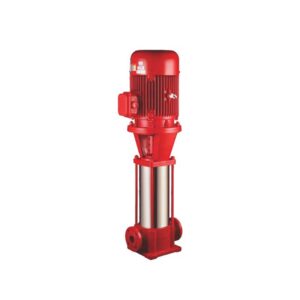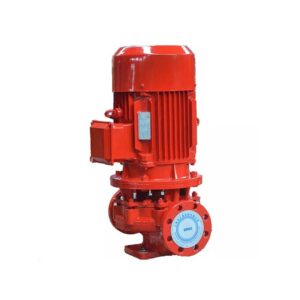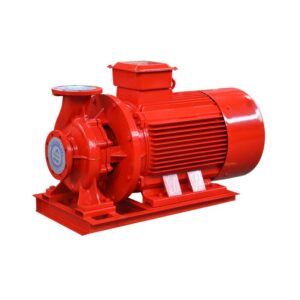
Product Introduction
The Vertical Turbine Fire Pump, a specialized unit designed to be the primary water source for fire protection systems that draw from below-ground water supplies. This pump is engineered and manufactured in strict accordance with NFPA 20 standards and is UL Listed and FM Approved for fire service. Its purpose is to reliably lift massive volumes of water from underground storage tanks, reservoirs, lakes, or rivers and deliver it at high pressure to sprinkler and hydrant systems. The pump is the approved, failsafe solution for ensuring water is available for firefighting when the source is located below the pump itself.
Design Philosophy & Construction
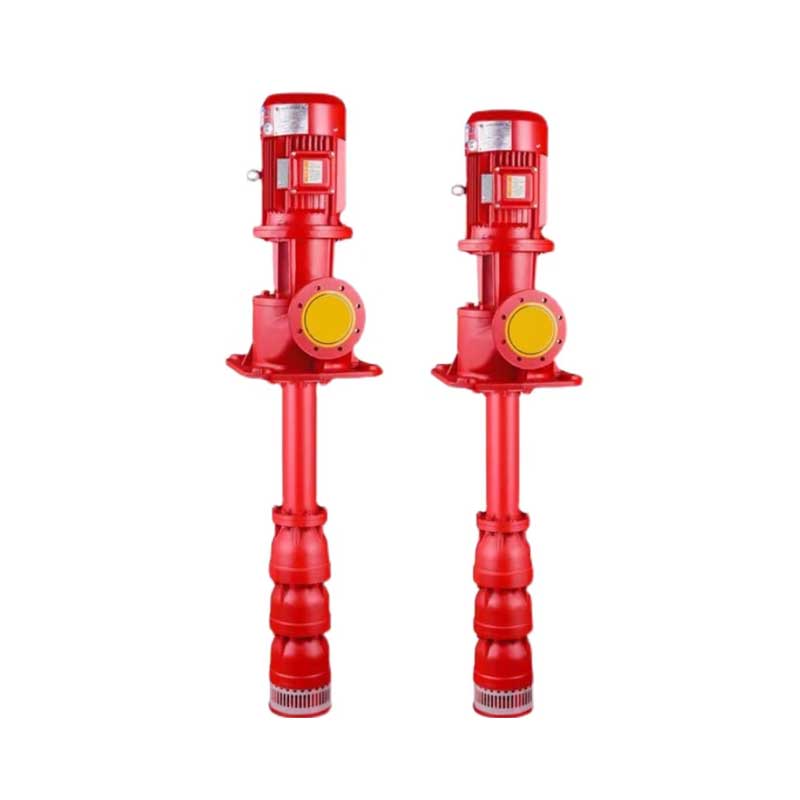
The vertical turbine pump’s design is a feat of engineering, consisting of three main sections that work together to lift water from significant depths. Every component is built to the exacting standards of NFPA 20 for life-safety equipment.
1. The Bowl Assembly (Submerged Pumping Section)
- Multi-Stage Design: The heart of the pump is the bowl assembly, which consists of a series of stacked stages. Each stage contains a high-efficiency impeller and a matching diffuser bowl. As water is drawn in from the bottom and travels upward, each stage adds pressure (head). The number of stages is precisely calculated to achieve the system’s required discharge pressure.
- Submerged Operation: This entire assembly is installed deep within the water source, ensuring the impellers are always flooded and submerged. This makes the pump inherently self-priming and ready to deliver water instantly upon activation.
2. The Column Pipe & Shaft Assembly
- Column Pipe: This is the series of heavy pipes that connects the submerged bowl assembly to the discharge head at the surface. It acts as the conduit, guiding the high-pressure water upwards.
- Line Shaft: A long, multi-section, high-strength steel shaft runs the entire length of the column pipe. It connects the driver at the surface to the impellers below, transmitting the torque needed to pump the water. The shaft is supported at regular intervals by precision-aligned bearings.
3. The Discharge Head & Drive Assembly (Above-Ground Section)
- Discharge Head: This is the robust cast iron or fabricated steel foundation of the surface unit. It supports the weight of the driver, seals the well or tank opening, and contains the discharge elbow that directs the water horizontally into the fire protection system piping.
- Listed Driver: The pump can be powered by two types of listed drivers:
- A UL/FM listed vertical hollow shaft electric motor for primary installations.
- A UL/FM listed diesel engine connected via a right-angle gear drive for backup power or off-grid sites.
Key Features & Benefits
- NFPA 20 Compliant & UL/FM Listed: This is not just a feature, but a guarantee. It certifies that the pump meets the highest global standards for reliability and performance in life-safety applications.
- The Solution for Below-Ground Water Sources: It is the designated and approved pump technology for reliably lifting water from underground storage tanks, deep wells, and natural bodies of water.
- Inherently Primed & Instantly Ready: Because the pumping elements are always submerged, the pump is perpetually primed and can deliver its full rated flow and pressure the moment it starts.
- Space-Saving Footprint: The vertical configuration requires significantly less floor space in a pump house compared to a horizontal pump, a major advantage in compact designs.
- High-Pressure, High-Flow Capability: The multi-stage design is easily configured to produce the extremely high pressures needed to protect the tallest buildings and the largest industrial facilities.
- Flexible Power Options: Can be driven by either a listed electric motor or a diesel engine, providing design flexibility to meet site-specific power availability and backup requirements.
Common Applications
The Vertical Turbine Fire Pump is specified for any fire protection system that relies on a water source located below ground level.
- Commercial & Industrial Sites: The primary pump for facilities using dedicated, underground fire water storage tanks.
- High-Rise Buildings: Supplying water from buried tanks to sprinkler systems that extend dozens of stories high.
- Rural & Remote Facilities: Drawing fire water directly from on-site sources like lakes, rivers, or large reservoirs for campuses, resorts, and industrial parks.
- Municipal Water Systems: Used in raw water intake stations that supply city-wide hydrant networks from a river or lake.
- Power Plants & Refineries: Essential for pumping cooling water from intake channels or ponds to serve the plant’s fire suppression system.