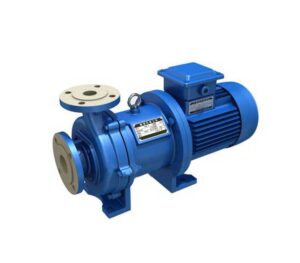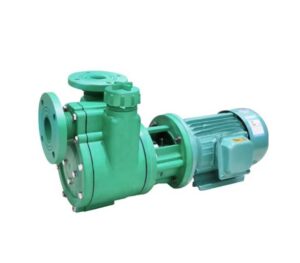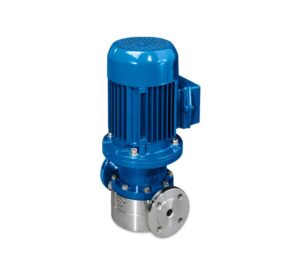
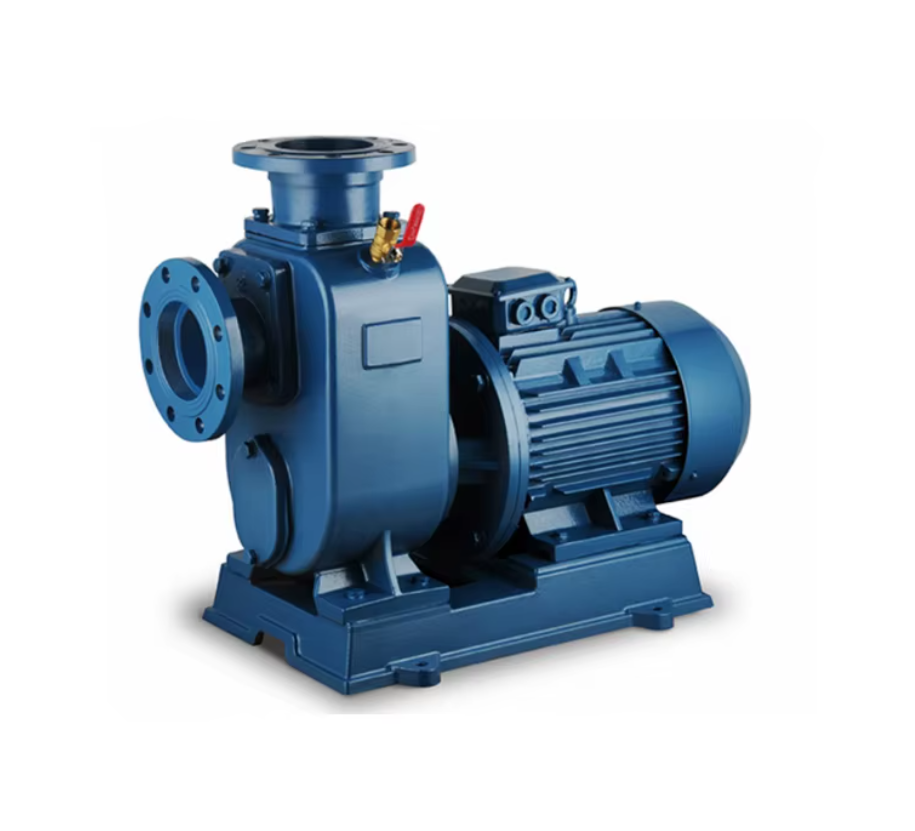
Introduction: The Self-Priming Trash Pump is engineered to perform in the toughest environments where water is mixed with significant solids and abrasive debris. Built for maximum durability and reliability, this pump is the ideal choice for construction dewatering, flood control, and agricultural applications. Its powerful self-priming capability combined with a rugged, open-impeller design allows it to move large volumes of dirty water effortlessly, while the easy-access service port ensures minimal downtime, even in the most challenging field conditions.
Operating Principle: Like other self-priming pumps, the series utilizes an internal fluid reservoir to create a vacuum and automatically purge air from the suction line, enabling it to lift water from a lower level. What makes it a “trash pump” is its internal design: a large, cavernous pump casing (volute) and a heavy, two-vane open impeller create a clear flow path. This design allows the pump to pass large solids, stringy material, and abrasive slurries that would instantly clog and damage standard pumps.
Key Features & Benefits:
- Superior Solids-Handling: Specifically designed to pass hard and soft solids up to several inches in diameter, making it virtually clog-proof.
- Rapid-Access Clean-Out Port: Features a large, easy-to-remove cover plate (often with no special tools required) that allows for quick inspection and removal of internal debris, maximizing uptime.
- Heavy-Duty Construction: Built with wear-resistant materials like ductile iron for the casing and impeller, and often includes a replaceable wear plate to protect the pump housing from abrasion.
- Reliable Self-Priming: Primes and re-primes automatically, even with intermittent flow, ensuring consistent operation without needing a foot valve.
- Versatile Drive Options: Can be flexibly coupled to either a standard electric motor for fixed installations or a diesel/gasoline engine for maximum portability and use in remote locations.
Common Applications:
- Construction: Dewatering of excavated foundations, trenches, and job sites.
- Emergency & Municipal: Floodwater removal, disaster relief operations, and sewer bypass pumping.
- Industrial: Transfer of industrial sludge, slurries, and wastewater with solids.
- Mining: Open-pit dewatering and slurry transfer.
- Agricultural: Pumping water from ponds, streams, or ditches for irrigation, and handling liquid manure.
Materials of Construction:
- Pump Casing: Ductile Iron / Cast Iron
- Impeller: Hardened Ductile Iron / Chromium Iron
- Wear Plate: Hardened Alloy Steel (Replaceable)
- Shaft: High-Tensile Alloy Steel
- Mechanical Seal: Silicon Carbide / Tungsten Carbide for abrasion resistance