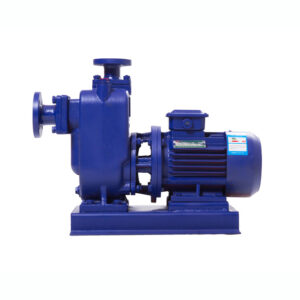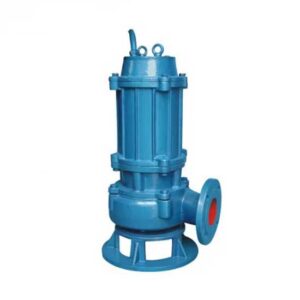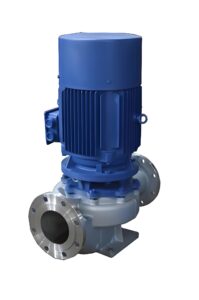
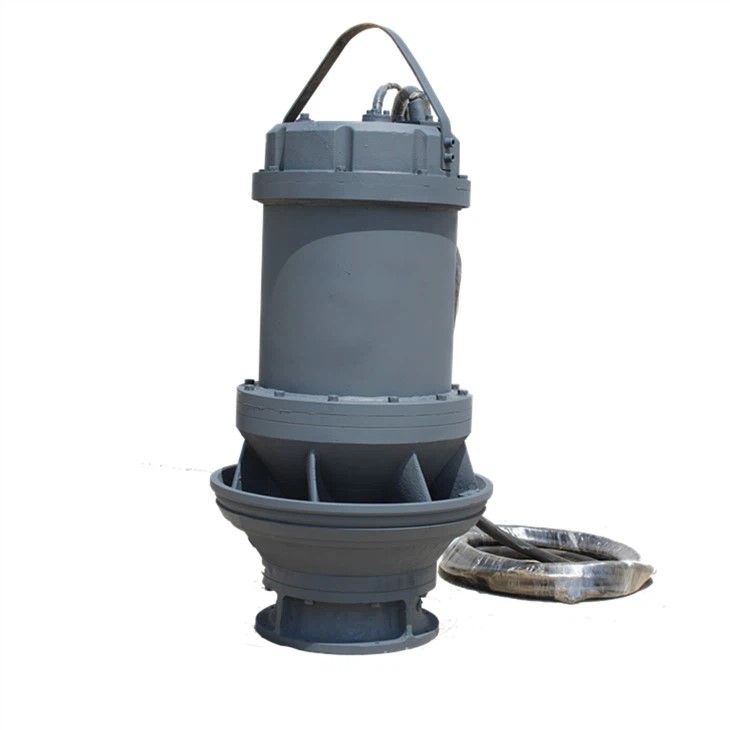
Introduction: The Axial Flow Pump is an engineering solution designed for one primary purpose: to move the largest possible volume of water over a short distance with minimal energy consumption. Unlike centrifugal pumps that create high pressure, an axial flow pump functions like a high-powered propeller in a tube, making it the ideal choice for applications like flood control, large-scale drainage, and bulk water transfer in treatment plants. When you need to move a river, not climb a mountain, the axial flow pump is the unparalleled solution.
Operating Principle: The operating principle of an axial flow pump is fundamentally different from a centrifugal pump. Instead of slinging water outwards, it pushes water directly forward, parallel to its axis—hence the name “axial flow.”
- Fluid Path: Water enters the pump and flows straight through a tube-like casing.
- Propeller Action: Inside, a large impeller with blades shaped like airfoils (similar to a boat or airplane propeller) rotates at high speed.
- Thrust Generation: As the blades spin, they generate “lift” or thrust on the water, pushing it forward with significant velocity and volume.
This method is extremely efficient for moving massive quantities of water but does not generate significant pressure (head). It is a high-flow, low-head machine by design.
Key Features & Benefits:
- Extreme High Flow Rate: Capable of moving hundreds of thousands of gallons per minute, far exceeding the capacity of conventional centrifugal pumps of a similar size.
- Low-Head Specialist: Perfectly designed for applications requiring bulk transfer against low resistance, such as emptying a basin, circulating water, or draining a flooded area.
- Energy Efficient for Bulk Transfer: At its designed operating point (high flow, low head), it consumes significantly less power than trying to use a centrifugal pump for the same task.
- Non-Clog Propeller Design: The wide passages between the propeller blades allow the pump to handle soft solids, debris, and impurities typically found in stormwater and screened sewage.
- Vertical, Space-Saving Installation: Typically installed vertically in a concrete sump or a metal column pipe, which provides a very small footprint on the ground level.
Common Applications:
- Stormwater pumping stations and municipal flood control systems.
- Influent pumping and return activated sludge (RAS) circulation in large wastewater treatment plants.
- Dewatering of docks, shipyards, and large construction sites.
- Large-scale land drainage and agricultural irrigation.
- Water circulation for aquaculture farms, large decorative fountains, and water theme parks.
- Raw water intake from rivers and lakes for industrial facilities.